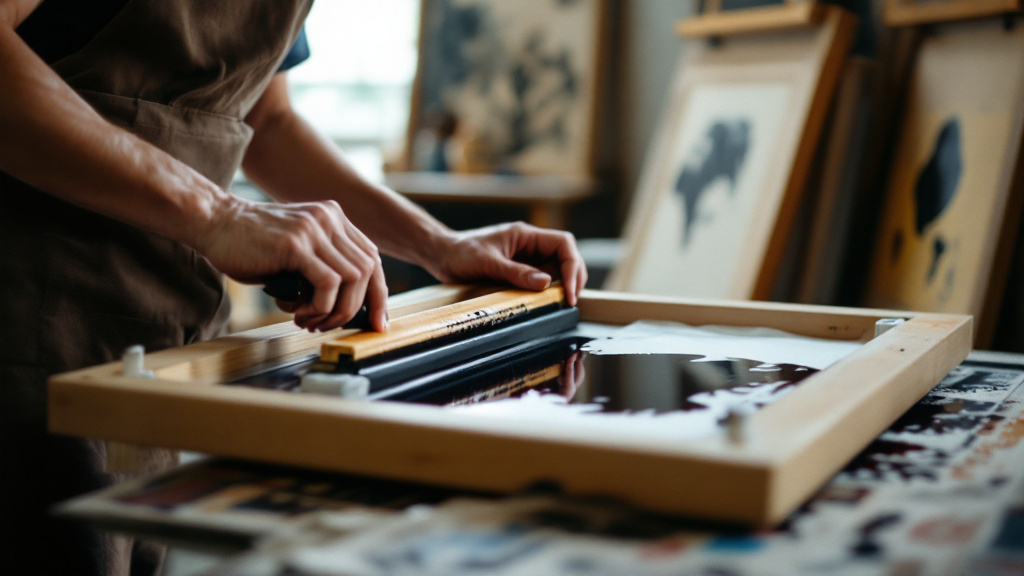
Before the photoshoots, before the logo, before Walk had a name, there was a tiny bedroom in Burrum Bay that smelled like detergent, cheap ink and ocean air sneaking in through a half-open window.
This is the night it really started: me, hunched over the floor, cutting out my first stencil by hand and hoping the blade wouldn’t slip.
Burrum Bay, four walls and a big idea
Burrum Bay is small. It’s the kind of place where people know which car you drive and where your mum does the groceries. It is not the place you imagine when you think about editorial streetwear.
My bedroom was smaller than the ideas in my head. A single bed pushed against the wall, a wobbly desk, clothes hanging everywhere, and a permanent pile of sketches and printouts on the floor. The carpet had already seen too much paint.
But it had what I needed:
- a door I could close
- a window for just enough breeze so the fumes didn’t knock me out
- a flat patch of floor big enough to lay out a tee
That was my first studio.
The $0 setup
There was no pro equipment, no fancy exposure unit, no big budget. Just stubbornness and a few basics I could scrape together.
- An old table that became my print bed
- A cheap screen bought after weeks of overthinking it
- A roll of tape, a craft knife, and a stack of clear plastic sheets
- Household items pressed into service: textbooks as weights, cereal boxes as test boards, a hairdryer as a fake flash dryer
Nothing matched. Nothing was aesthetic. But everything had a job.
The stencil that changed everything
The design was simple: bold shapes, sharp lines, just enough attitude to feel like the streets I wanted to be walking even though I was still stuck in my room. I had drawn it over and over in a sketchbook, refining every angle until it felt right.
I remember sitting cross-legged on the floor with the plastic laid over my sketch, the craft knife in my hand, and that weird mix of excitement and fear. This was not just a DIY project; this felt like a line in the sand. Either it worked, or I went back to just daydreaming about clothes.
Cutting a stencil looks easy until you are two hours in, your neck hurts, and one wrong move can ruin the whole thing. Every cut was a decision: commit or start again.
There is a moment in every piece where you can’t undo what you just did. That’s the moment this stopped being a hobby.
That image of me, bent over the floor with the knife, shreds of plastic everywhere, is the real origin story of Walk. Not a launch day, not a website going live. That night.
Ink, mistakes and a bedroom war zone
Once the stencil was done, the room turned into chaos.
- Secure the stencil to the screen with too much tape.
- Line up the first tee and realise the bedspread was printed more than the shirt.
- Try again on a piece of cardboard.
- Drop ink on the sleeve.
- Swear quietly because the house was asleep.
The first pull of the squeegee was ugly. Patchy ink, blurred edges, not at all like the clean streetwear I had in my head. But under the mess, the idea was there. Loud. Confident. Unapologetic.
I chased that better version through the night. Adjusting pressure, cleaning the screen in the bathroom sink, waving the hairdryer over wet cotton and hoping nothing caught fire or fused permanently to the furniture.
By the time the sun hinted through the curtains, I had one tee that felt right enough to keep. Not perfect. Just honest. It looked exactly like where it came from: a bedroom in Burrum Bay and someone who refused to wait for a perfect studio.
Why that bedroom still matters to Walk
Every piece we make at Walk still carries some of that first night.
- Editorial, but scrappy: We care about sharp lines and bold silhouettes, but we never forget that this started on a sagging mattress and a borrowed table.
- Street, not sterile: The prints are meant to be lived in, walked in, thrown on the floor, picked up again. Just like those early tees.
- DIY energy, grown up: Today there is better gear and more polish, but the spirit is the same: cut it yourself, test it yourself, wear it yourself.
When you see that image of me on the floor in Burrum Bay, cutting out the first stencil, that is not just nostalgia. That is the blueprint: start where you are, with what you have, and make it loud enough that the world has to notice eventually.
Walk began in that bedroom. Every print since is just a longer, louder version of that first cut.